Gut Health Supplement Reviews and Fake Listings: How to Spot Diverted Stock
Quick Answer: How Do You Tell a Genuine Supplement Listing From a Bad One?
Check who is actually selling, not who made the product. On a marketplace, the brand name in the title tells you nothing about the seller — and the NIH Office of Dietary Supplements advice on buying supplements starts from the same place, the storage history or whether the manufacturer's guarantee still applies — and star ratings attach to a listing rather than to the bottle that will arrive at your door. The reliable signals are a named authorised seller, a printed batch code and expiry on the bottle itself, an intact induction seal, and returns handled by someone who can honour them.
- Diverted stock is usually genuine — the unknown is where it has been, not what it is.
- Ratings do not travel with a batch; listings can be merged, swapped or taken over.
- Buying from the manufacturer's own store is the shortest verifiable supply chain available to you.
What "diverted stock" actually means
Diverted stock — grey-market stock, to use the other common term — is genuine product that has left the route the manufacturer intended. Nobody counterfeited it — a different risk from outright adulteration, which a review of the prevalence of adulteration in dietary supplements documents as a recurring problem, most heavily studied in sports products. It was made in the same facility, filled from the same batch and printed with the same label as the unit sold through official channels. What changed is the journey. It was bought in bulk by a third party, or acquired as distributor overstock, returned inventory or a closeout lot, and then listed independently by a seller with no relationship to the brand.
The practical consequences are narrow but real. You lose the storage record, which for a product containing live organisms is the part that matters most — NCCIH notes that probiotic products lose viable organisms when they are not stored as labelled. You lose the shelf-life margin, because diverted lots are frequently the oldest stock in the chain — that is often precisely why they were sold on. And you usually lose the manufacturer's guarantee, because a guarantee is a contract with the buyer of record, and a marketplace order makes the reseller the buyer of record rather than you.
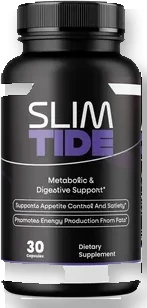
That last point is worth stating plainly, because it is the one people discover only when they want to use it. The SlimTide offer carries a sixty-day money-back guarantee, and that guarantee is administered by the manufacturer for orders placed through its own store. An order placed with an unrelated marketplace seller falls under that seller's returns policy instead, whatever it happens to be. Always read the terms rather than assuming the brand's promise follows the bottle.
Where a supply chain leaks
It is easier to spot a problem when you know how stock escapes in the first place. There are four common routes, and they produce different risk profiles.
Bulk purchase and resale. Someone buys a large quantity at a promotional rate and lists the units individually. The product is genuine and often reasonably fresh. The unknowns are storage between purchase and dispatch, and the absence of any guarantee.
Returned and refused inventory. Units that came back from customers are consolidated and resold. The seal may have been broken and re-taped; the storage history includes an unknown period in someone's house and a second trip through the post.
Distributor overstock and closeouts. Older lots cleared as a block, usually close to expiry. Frequently the explanation for a listing priced far below the official store.
Outright counterfeiting. Rarer and more serious. Here the bottle is not the product at all — it is a copy, sometimes an empty imitation, and in the worst documented cases a product containing undeclared pharmaceutical ingredients. Regulators publish ongoing lists of supplements found to contain hidden drug ingredients, and almost all of them were sold online through unofficial channels.
A counterfeit is a problem with what is in the bottle. Diverted stock is a problem with what has happened to the bottle. The first is rarer and worse; the second is common and quietly expensive.
Skipping the guesswork entirely
The shortest supply chain available to a retail buyer is the manufacturer's own store: one hop, a documented dispatch, and the published guarantee attached to your order rather than to a reseller's account. We grade the formula itself elsewhere on this site — if you have done that reading, the official offer page is here.
See the Official SlimTide Offer
Affiliate link. We may earn a commission at no additional cost to you.
Why gut health supplement reviews tell you less than you think
People lean on star ratings because they are the most visible signal on a listing, and for provenance they are close to worthless. The reason is structural rather than moral: on large marketplaces, ratings attach to a listing identity, not to a seller and not to a batch. Listings get merged with near-identical products. Variations get added and removed, pooling feedback from items that were never the same thing. Established listings occasionally change hands, and the accumulated rating history stays put while the product behind it changes.
Add the ordinary distortions on top. Feedback written the week a parcel arrives cannot speak to anything that takes eight weeks to notice. Incentivised ratings inflate averages. Negative comments about slow delivery sit in the same average as comments about the product. The result is that gut health supplement reviews on a marketplace measure the buying experience far better than they measure the bottle, and provenance is exactly the thing they cannot see.
There is a more useful way to read them. Ignore the average and read the one- and two-star text for a single specific thing: complaints about the physical item. "Seal was already broken", "expiry was two months away", "label looked different from the photo", "arrived loose in a bag". Those are provenance signals, and they are the only part of the feedback that is telling you about supply rather than about sentiment.
Six tells on a listing, ranked by how much they matter
Not every warning sign carries the same weight. The table below sorts them, because a lot of buying advice treats a typo in a listing title as equivalent to a missing batch code, and they are not remotely equivalent.
| Signal | What it usually means | How much it matters | What to do |
|---|---|---|---|
| Seller is not the brand or a named authorised retailer | Independent reseller, provenance unknown | High | Check the brand's own site for its authorised sellers before ordering |
| No batch or lot number printed on the bottle | Repackaged, relabelled or counterfeit | High | Do not use it; return it |
| Expiry printed on a sticker rather than on the label | Date possibly altered or applied after the fact | High | Photograph it and query it with the seller |
| Price far below the manufacturer's own store | Close-dated clearance, or not the product shown | Medium | Check the expiry date before anything else |
| Listing images are stock photos or mismatched packaging | Listing may not describe the item actually shipped | Medium | Ask for a photo of the real bottle and its panel |
| Rating history that jumps suddenly on a new seller account | Possible listing takeover or incentivised ratings | Low to medium | Weight the physical checks above instead |
The checks that work once the parcel arrives
Everything up to this point is guesswork; the bottle in your hand is evidence. Five checks take about a minute in total.
- Induction seal. There should be a foil membrane bonded to the neck under the cap, intact and unpunctured. The SlimTide label carries the standard instruction not to use the product if the safety seal is damaged or missing, and that instruction is worth following literally.
- Batch or lot number. Printed directly onto the label or embossed on the bottle, not written on a sticker. A missing code means the unit cannot be traced to a production run at all.
- Expiry date. Printed by the same method as the batch code. Check how much shelf life is left, not merely that it has not passed.
- Panel accuracy. Compare the Supplement Facts panel against the manufacturer's published label. Amounts, ingredient order and the other-ingredients line should match exactly — and knowing how to read that line is a skill in itself, which we cover in spotting fillers and flow agents on a label.
- Print and packaging quality. Blurred text, colour shifts, misaligned labels and spelling errors are cheap to spot and are the classic counterfeit tells.
If any of the first three fail, stop. Do not take the product and do not accept a partial refund in exchange for keeping it. A bottle whose origin cannot be established is not a bargain at any price.
What the manufacturer's own store gives you
The honest summary is: fewer unknowns, not magic. Ordering direct removes several variables at once. There is one custody hop rather than three or four. The dispatch is documented against your order, so the storage history is short and attributable. The guarantee attaches to you as the buyer of record. And the batch shipped is normally current production rather than whatever was cleared eighteen months ago.
None of that makes the product work better. It makes the product you receive the product that was tested, sealed and dated by the manufacturer, which is a lower bar than it sounds and one that marketplace listings routinely fail. It also removes the storage lottery, which for a formula containing live organisms is the difference that quietly matters most — the mechanics of that are set out in how heat and humidity affect potency.
This is also the practical answer for anyone comparing the best gut health supplement brands across half a dozen tabs. Whatever you conclude about the formula, buy the conclusion you reached — not a listing that shares its name. People searching for the best gut health supplement at Walmart, on Amazon or through a search result are usually one click away from a bottle with a completely different history from the one they researched. If the product you settled on is SlimTide, the direct-order route and the checks that go with it are set out in where to buy SlimTide safely online.
What these checks cannot do
Three limits, stated straight. First, none of these checks verify potency. An intact seal and a fresh batch code confirm that a bottle is what it claims to be and has been handled through a known route. They do not confirm that the live organism count meets the label, that the fibre content is what the panel says, or that the raw material was identity-tested. Only laboratory testing does that, and it is not something a buyer can do at home.
Second, a perfect supply chain does not improve a weak formula. If an ingredient is present at a fraction of the amount used in the research, direct dispatch preserves that fraction and nothing else. Provenance is a floor, not a ceiling — it protects the value that exists rather than creating any. The evidence question is separate and comes first, which is why the ingredient-by-ingredient grading sits on the SlimTide ingredient breakdown rather than here.
Third, and most important: nothing about where you buy a supplement changes what a supplement is. These are dietary supplements, not medicines. They are not intended to diagnose, treat, cure or prevent any disease, and buying from an official store does not alter that in the slightest. For most formulas in this category, including this one, there is published research on the individual ingredients and no trial on the finished combination. Provenance checks protect you from a bad bottle. They cannot manufacture evidence that does not exist.
Common questions
What is diverted stock?
Diverted stock is genuine product that has left the manufacturer's authorised route to the customer. It reaches a reseller through bulk buying, returns, distributor overstock or closeouts, and is then listed independently. The bottle may be exactly what it says it is. What is missing is any record of how it was stored, how old it is, and whether the manufacturer's guarantee still attaches to it.
Why is the same supplement so much cheaper on a marketplace?
Usually one of three reasons. The stock is close to its expiry date and is being cleared, it was acquired outside the authorised channel and carries no support cost, or the listing is not selling what the images show. A large gap against the official store is not proof of a problem, but it is the single most reliable prompt to check the seller name, the expiry date and the returns terms before ordering.
Do star ratings on a listing apply to the bottle I will receive?
Not necessarily. Ratings attach to a listing rather than to a seller or a batch, and on large marketplaces a listing can change hands, change variations or be merged with another product while its rating history stays in place. That is why a high average tells you very little about provenance, and why the seller name and the physical bottle checks matter more.
How do I check a bottle after it arrives?
Look for an intact induction seal under the cap, a batch or lot number and an expiry date printed directly onto the label or bottle rather than applied on a sticker, a Supplement Facts panel that matches the manufacturer's published label exactly, and packaging free of spelling errors or blurred print. If the batch code is missing or the seal is broken, do not take it, and contact the seller for a return.
References and further reading
- NIH Office of Dietary Supplements — dietary supplements: what you need to know
- NCCIH (NIH) — dietary and herbal supplements
- Mayo Clinic — drugs and supplements reference
- Harvard T.H. Chan School of Public Health — The Nutrition Source: the microbiome
- Prevalence of adulteration in dietary supplements and recommendations for safe supplement practices (Frontiers in Sports and Active Living, 2023)
General information, not medical advice. These statements have not been evaluated by the Food and Drug Administration, and no dietary supplement is intended to diagnose, treat, cure or prevent any disease. Speak to a qualified healthcare professional before changing what you take.
Provenance is the cheapest protection in this category and the easiest to skip. If you have already weighed the panel against the research and want to know where to buy the formula from the manufacturer's own store — current batch, documented dispatch, guarantee attached to your own order rather than a reseller's — the official offer page is below.
Affiliate link. Salimtide Evidence Room earns a commission on purchases made through it, at no extra cost to you. We are not the manufacturer.