Gut Health Supplements FSA Eligible: What Actually Qualifies
Quick Answer: Can You Pay for Supplements With an FSA or HSA?
Generally no, not when you are buying them for general wellness. US tax rules treat vitamins, herbal products and nutritional supplements as ordinary food-type purchases — see the NIH Office of Dietary Supplements on how supplements are classified — unless a medical practitioner has recommended a specific product to address a condition that has been diagnosed — and in that case you need a signed letter of medical necessity on file before the claim will pass. The account type barely matters; the reason for the purchase is what decides it.
- General wellness purchases: not eligible, regardless of how healthy the product is.
- Recommended for a diagnosed condition: often reimbursable with a letter of medical necessity.
- Always confirm with your own plan administrator first — they make the eligibility call, not the seller.

What these accounts are, in one paragraph each
A flexible spending arrangement is set up by an employer and funded from your salary before tax. You elect an amount at open enrolment, the whole election is available from day one, and the money is tied to the plan year. Depending on what your employer chose, you either get a limited carryover into the next year or a short grace period after it ends, but not both, and anything left over after that is forfeited. That deadline is why supplements suddenly become an interesting question every December.
A health savings account is different in almost every respect that matters. You have to be enrolled in a qualifying high-deductible health plan to contribute, the account belongs to you rather than to an employer, the balance rolls over indefinitely, and it can usually be invested. There is no year-end scramble. Because the money is yours permanently, the incentive to spend it on borderline items is much weaker — and the penalty for getting eligibility wrong is stiffer, since a non-qualified withdrawal is taxed as income and, below the age threshold in the rules, carries an extra penalty tax on top.
A health reimbursement arrangement is employer-funded and employer-designed, which means the eligible expense list can be narrower than the tax code allows. If you have one, the plan document is the authority, not a general article.
The rule that decides everything
Strip away the account types and one distinction does all the work: is this purchase for general health, or is it treating a specific condition that a physician has diagnosed?
The IRS guidance on medical expenses is unusually direct about supplements. It is set out in IRS Publication 502 on medical and dental expenses. Nutritional supplements, vitamins, herbal products and similar items cannot be counted as medical expenses when they are taken to maintain general good health. They can be counted when a medical practitioner has recommended them as treatment for a specific medical condition that has been diagnosed. That is the whole test, and it turns on intent and documentation rather than on the contents of the bottle.
This catches people out because it is not a judgement about quality. A well-made prebiotic fibre with good research behind it and a poorly made one with none are treated identically by the rule — and most of the supplement use recorded among US adults in NHANES is exactly the general-wellness use the rule excludes — both are general wellness purchases in the absence of a diagnosis and a recommendation. Conversely, an unglamorous product can qualify if a practitioner has tied it to a condition in writing.
One common misconception is worth clearing up. Legislation passed in 2020 removed the prescription requirement for over-the-counter drugs and medicines, which is why you can now buy pain relief or allergy tablets with the card without a doctor's note. Dietary supplements are not drugs or medicines in that sense, and that change did not move them into the eligible column. A multivitamin is still a multivitamin as far as the rule is concerned.
Eligibility is not a statement about whether a supplement works. It is a statement about whether the tax code counts your reason for buying it as medical care.
Working out whether the formula is worth funding at all
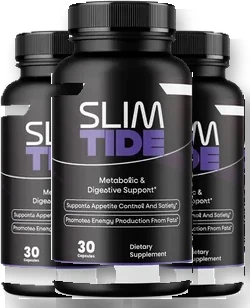
Before the paperwork question comes the harder one: does the panel justify the purchase from any account? We grade each ingredient against the research that exists at that dose and say plainly where it runs out. If you have already done that reading and want the manufacturer's own store rather than a marketplace listing, the offer page is here.
See the Official SlimTide Offer
Affiliate link. We may earn a commission at no additional cost to you.
Where a letter of medical necessity changes the answer
The letter of medical necessity, usually abbreviated to LMN, is the mechanism that moves an item from the grey column into the reimbursable one. It is a short document, signed by a licensed practitioner, that says four things: what condition has been diagnosed, what product or ingredient is being recommended, why it is being recommended for that condition, and how long the recommendation is expected to run.
A few practical points that administrators rarely explain up front. The letter usually has to exist before or around the time of purchase rather than being produced afterwards to rescue a rejected claim. Most administrators treat a letter as valid for a single plan year and want a fresh one after that. Almost all of them have their own template, and using theirs is faster than writing your own. And a recommendation that reads "for general gut health" will not survive substantiation — the whole point is that the letter names a diagnosis.
It is also worth being honest about what an LMN is not. It is not a claim that the supplement treats or cures anything, and it does not turn a dietary supplement into a medicine. It records that a clinician, knowing your diagnosis, considered this product part of your care. Whether the underlying evidence justifies that decision is a separate question, and one you should be asking anyway.
Gut health supplements FSA eligible: how to check before you buy
Search results are a poor guide here, because eligibility lists are produced by administrators rather than by sellers, and a product page saying "FSA eligible" is a marketing claim rather than a ruling. Work through this order instead.
- Open your administrator's own eligible expense list — the portal or app, not a general web search. This is the only list that binds your plan.
- Search the category, not the brand. Look up "dietary supplement", "probiotic" and "vitamin" rather than a product name, because lists are organised by category.
- Note whether the entry says "with LMN". That is the flag that tells you documentation is required rather than optional.
- Ask your practitioner before buying, not after a claim is rejected. Retroactive letters are frequently refused.
- Keep the itemised receipt, showing the product name, the date and the amount. A card statement line is not itemised and is usually rejected as substantiation.
- File manually if the card fails, which for a manufacturer's own checkout it very often will.
That last point deserves its own explanation, because it is the single most common source of confusion about whether gut health supplements FSA eligible status exists at all.
Why the card gets declined even when the item might qualify
Approval happens at the merchant, not at the account. Large pharmacies, supermarkets with pharmacy counters and dedicated eligibility retailers run an inventory approval system that checks each scanned item against a coded list at the point of sale. When the system recognises an eligible item, the card clears with no further paperwork. When it does not, the card declines, and that decline says nothing about whether the expense would be reimbursable through a manual claim.
Direct-response supplement checkouts — the manufacturer's own store, which is where most single-product offers in this category are sold — almost never operate that system. So the card fails, and people reasonably conclude the product is ineligible. It might be, but the decline is not the evidence. The correct move is to pay by ordinary means, keep the itemised receipt, and submit a manual claim with the letter attached if you have one.
There is a second reason to expect friction. Buying from a marketplace listing rather than the official store often produces a receipt that names a third-party seller and not the product, which is exactly the kind of substantiation an administrator bounces. It is one more argument for buying from the manufacturer's own store, alongside the more important ones about provenance and storage history that we set out in spotting fake listings and diverted stock.
How the account types compare on this question
The table below is a general orientation, not plan-specific advice. Your own plan document and your administrator's list override everything in it.
| Account | Who sets the rules | Does the balance roll over | Supplements for general wellness | With a letter of medical necessity |
|---|---|---|---|---|
| Health FSA | Employer plan within IRS limits | No — limited carryover or a short grace period, at the employer's option | Not eligible | Commonly reimbursable if the letter names a diagnosis |
| Limited-purpose FSA | Employer plan, paired with an HSA | Same as a health FSA | Not eligible | Usually still not eligible — these are restricted to dental and vision |
| HSA | IRS rules, account owned by you | Yes, indefinitely, and it is portable | Not a qualified expense | Commonly a qualified expense with documentation retained |
| HRA | Employer, and often narrower than the tax code | Employer's choice | Not eligible | Depends entirely on the plan document |
| Dependent care FSA | Employer plan within IRS limits | No | Not applicable — childcare only | Not applicable |
What goes wrong, and what it costs
Claims fail in a small number of predictable ways. A card statement is submitted instead of an itemised receipt. The letter is dated after the purchase. The letter describes a goal rather than a diagnosis. The product was bought from a seller whose receipt does not identify what was actually sold. Or the plan year closed before the claim went in, which on an FSA is unrecoverable.
The consequences differ by account. On an FSA, an unsubstantiated card transaction is normally recovered — offset against a future claim, repaid directly, or ultimately added to your taxable wages. On an HSA, the money has already left the account, so an unqualified distribution is reported as income at tax time and, below the age threshold set in the rules, attracts an additional penalty tax. Neither outcome is dramatic, but both are entirely avoidable by asking one question before the order rather than after it.
The end-of-year deadline is what pushes people into bad decisions here. Buying a stack of bottles in late December to use up a balance is a poor plan twice over: the eligibility question does not change because the deadline is close, and a large purchase held for months raises the storage question instead. If you do buy ahead, the storage rules for keeping potency matter more than usual, and buying from the source keeps the receipt itemised in the way a substantiation request expects — which is one more reason to follow the route in where to buy SlimTide safely online.

What this article cannot do
Three honest limits. First, we are not tax advisers and nothing here is tax advice. The rules are federal, the interpretations are made by plan administrators, and administrators genuinely differ on borderline categories. The only binding answer for your situation comes from your own plan and, where the amounts are meaningful, from a qualified tax professional.
Second, the rules move. Contribution limits are indexed annually, carryover amounts change, and legislation has altered eligibility more than once in recent years. Anything you read about this topic — here or anywhere — deserves a check against current IRS guidance before you rely on it.
Third, and most important for this site: eligibility says nothing whatsoever about whether a supplement works. A product can be reimbursable and useless, or excellent and entirely out of scope. Nothing in this article should be read as a claim that a dietary supplement diagnoses, treats, cures or prevents any disease, because none of them do. For most gut and metabolic formulas there is research on the individual ingredients and no published trial on the finished combination, and a tax rule does not change that evidence picture in either direction. If you want the evidence question rather than the paperwork one, the ingredient-by-ingredient grading behind this product is on the SlimTide ingredient breakdown.
Common questions
Are probiotics and fibre supplements FSA eligible?
Not when they are bought for general wellness. Under the IRS rules that govern these accounts, nutritional supplements, vitamins and herbal products are treated as ordinary food-type purchases unless a medical practitioner has recommended them to address a specific condition that has been diagnosed. With that recommendation documented in a letter of medical necessity, many plan administrators will reimburse them.
What is a letter of medical necessity?
It is a short signed statement from a licensed practitioner naming the diagnosed condition, the specific product or ingredient being recommended, and the expected duration of use. Administrators normally ask for it before reimbursing anything in a grey category. Most plans will send you a template, and most letters are treated as valid for a single plan year rather than indefinitely.
Why was my FSA card declined at a supplement checkout?
Because card approval happens at the merchant, not at the account. Large pharmacies and dedicated eligibility stores run an inventory system that checks each item against an approved list at the till, and a direct-from-manufacturer checkout usually has no such system. The workaround is to pay normally, keep the itemised receipt, and file a manual reimbursement claim with the documentation your administrator requires.
What happens if I claim something that is not eligible?
The administrator will usually ask for substantiation, and if you cannot supply it the amount is either repaid, offset against a later claim, or added to your taxable income. On a health savings account, a non-qualified withdrawal is taxed as income and, before the age threshold set in the rules, carries an additional penalty tax on top. None of this is criminal, but it is expensive and easily avoided by checking first.
References and further reading
- NIH Office of Dietary Supplements — dietary supplements: what you need to know
- NCCIH (NIH) — dietary and herbal supplements
- Mayo Clinic — drugs and supplements reference
- Harvard T.H. Chan School of Public Health — The Nutrition Source: vitamins and supplements
- Quantity, duration, adherence and reasons for dietary supplement use among adults: NHANES 2011-2018 (Nutrients, 2024)
General information, not medical or tax advice. These statements have not been evaluated by the Food and Drug Administration, and no dietary supplement is intended to diagnose, treat, cure or prevent any disease. Speak to a qualified healthcare professional before changing what you take, and to your plan administrator before making a claim.
Sort the eligibility question before the order, not after it — and sort the evidence question before either. If the panel holds up for you as a best gut health daily supplement candidate and you want to know where to buy it from the manufacturer's own store rather than a marketplace listing whose receipt no administrator will accept, the official offer page is below.
Affiliate link. Salimtide Evidence Room earns a commission on purchases made through it, at no extra cost to you. We are not the manufacturer.